
Osteoporosis and Dental Health: Why Jawbone Health Starts Below the Surface

Updated: Jan 25

Most of us don’t think much about our jawbone unless it starts popping, cracking, or comes up during a dental implant consult.
But here’s what often gets missed: a specific part of your jaw, the alveolar bone, does the quiet, constant work of keeping your teeth stable and supported.
And when bone density begins to decline, the mouth can be one of the first places those changes show up, sometimes long before the hips, spine, or wrists raise concern.
The alveolar bone is the foundation that anchors your teeth. It responds quickly to daily chewing forces and remodels faster than other bones in the body. That adaptability is helpful, but it also makes it more vulnerable.
And despite what many people assume, brushing and flossing alone can’t protect it.
Is Alveolar Bone Really That Different?
You’ll sometimes hear that alveolar bone is “different” because of how quickly it responds to local stress and inflammation.
That’s true, but it’s still bone.
Which means when the body is losing bone density systemically, the jaw isn’t exempt.
Osteoporosis doesn’t politely skip the mouth.
The Overlooked Link Between Osteoporosis and Jawbone Health
Research has consistently shown connections between low bone density, alveolar bone loss, and periodontal disease, especially in postmenopausal women. (Source)
Clinically, this is more common than people expect. Over the years in the dental chair, I began noticing recurring patterns: gum recession that didn’t fully match plaque levels, slower healing, shifting teeth, and bone changes that raised bigger questions than oral hygiene alone could answer.
That’s when it became clear: osteoporosis and dental health are deeply connected.
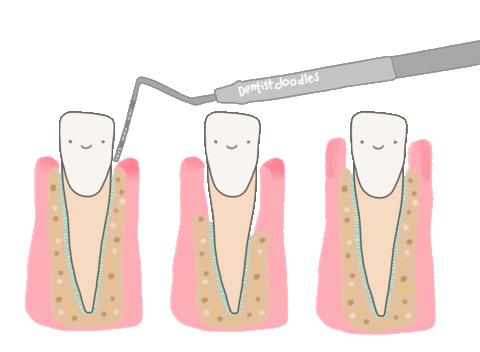
What Happens When Alveolar Bone Breaks Down?
Think of a Pinterest-worthy house with shiny fixtures and fresh paint. Everything looks fine on the surface, but has a weakening foundation underneath.
That’s what alveolar bone loss can look like.
At first, changes may be subtle. Gums appear thinner. Teeth feel slightly different. But as bone support diminishes, the effects become harder to ignore:
gum recession
shifting or loosening teeth
bite changes
increased risk of tooth loss
These aren’t just dental problems. They’re signals that the body’s structural support systems need attention.
Real Talk & Final Bite
If you’re experiencing gum recession, slow healing, or loose teeth, your body may be offering an early clue, not just about your oral health, but about your overall resilience.
Bone health is influenced by more than calcium and cleanings. Digestion, hormones, inflammation, and nutrient absorption all play a role in how bone, including the jawbone, holds up over time.
This is where a functional, whole-body lens becomes essential. Not to jump to conclusions, but to ask better questions and see patterns more clearly.
Because jawbone health doesn’t start at the surface, it starts below it.
-Khristina Maureen
Your Functional Nutrition Ally
Want to DIG Deeper?
Bone health is a whole-body conversation.
If you want a clearer way to connect the dots, start with the DIG Deep Starter Guide or


Comments