
Are Teeth Bones? The Truth About Tooth Anatomy and Bone Loss

Updated: Jan 23

“Wait, Are Teeth Bones?”
A patient asked me this today while looking at his X-rays. And honestly, it’s a fair question.
Teeth are hard, white, and live inside your face… so the assumption makes sense.
But nope. Teeth are not bones. Let’s break it down.
Teeth vs. Bones: What's the Difference?
Both teeth and bones are calcium-rich, but they’re built differently, act differently, and (spoiler) heal differently.
Teeth | Bones |
Made of enamel (96% hydroxyapatite) | Made of living tissue and collagen |
Can’t regenerate | Can remodel and repair over time |
No bone marrow | Contain bone marrow |
Anchored in the jawbone | Are the jawbone |
So while they hang out in the same neighborhood (your mouth), teeth and bones are fundamentally different.
Quick Tooth Anatomy Refresher
Let's delve into the details for a moment.
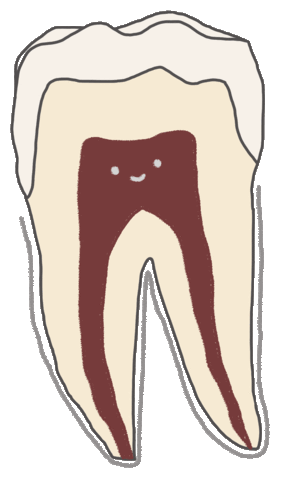
Your teeth have layers:
Enamel - The outer shield. Made of ~96% hydroxyapatite, with small amounts of water and structural proteins like enamelin.
It’s the hardest substance in your body, but it has no living cells, so it can’t regenerate.
Dentin - A softer, sensitive layer beneath the enamel.
Pulp - The nerve center (blood vessels + nerves).
Cementum - Covers the root and connects to the periodontal ligament.
The tooth sits in the alveolar bone.
That’s the bone we’re trying to protect.
So What Is Bone Loss, Then?
When we say “bone loss,” we’re talking about the jawbone, specifically the alveolar bone that holds your teeth in place.
Think of it like a foundation.
If the structure beneath your house starts breaking down, everything above it becomes unstable.
Same idea here.
Lose the bone, and your teeth lose their support.
Behind the Bite: What X-Rays Really Reveal
Today’s patient had X-rays from 2022 and 2025 side-by-side.
The difference?
Visible bone loss.
Now, this patient's doing what he can, but let’s be honest: Flossing is nearly impossible when your lower front teeth are packed tighter than a Costco parking lot.
We talked about how aligning those teeth could help.
Not just for looks, but for functionality, easier plaque control, and long-term gum support.
But here’s the kicker:
Why is he building up tartar so fast in the first place?
Did you know? Bone loss in the jaw usually doesn’t hurt until it’s advanced.
That’s why your X-rays matter more than you think.
Nearly 47% of U.S. adults over 30 have some form of periodontal disease.
And many don’t even know it’s tied to systemic inflammation. (Source)
When bone loss shows up that quickly, it’s a sign of something deeper.
Internal stressors like inflammation, hormone imbalances, or sluggish detox pathways can silently chip away at your jaw’s structural integrity long before pain or bleeding ever show up.
Why You Might Be Losing Bone (Even If You Brush Like a Boss)
Crowded teeth → harder to clean → more plaque → more inflammation
Chronic inflammation → immune response → bone breakdown
Hormonal changes → less bone stability
Blood sugar imbalance → increased cytokines → slower bone repair
Poor detox (hey, liver!) → trapped toxins → tissue damage
So no, it’s not just about brushing and flossing. Your body might be whispering (or shouting),
“I need deeper support.”
What You Can Do (Besides Flossing More)
Keep up with cleanings (especially if you have crowding)
Use those specialty tools your hygienist gave you (you know- the ones you promised to use but ghosted. Time to reunite.)
Ask to review your X-rays for bone changes
Eat anti-inflammatory foods
Stay hydrated to support detox
Look beyond your gums, consider liver, blood sugar, and hormones too
Real Talk & Final Bite
Teeth aren’t bones, but they do depend on bone.
When the jawbone starts breaking down, the foundation of your smile becomes unstable.
So the next time you hear "bone loss," don’t just reach for floss, get curious.
Your mouth might be the first place your whole-body health is showing up.
-Khristina Maureen
Your Functional Nutrition Ally
Want to DIG deeper?
Wondering what your mouth might be saying about your body?


Comments